

Where Spelling Brings Hope
And A Way To Be Heard
We offer Spelling to Communicate and Tutoring services in Denver, Aurora, and Arvada, Colorado (and virtually) to nonspeaking, minimally speaking, and unreliably speaking individuals, ages 4 - adult.

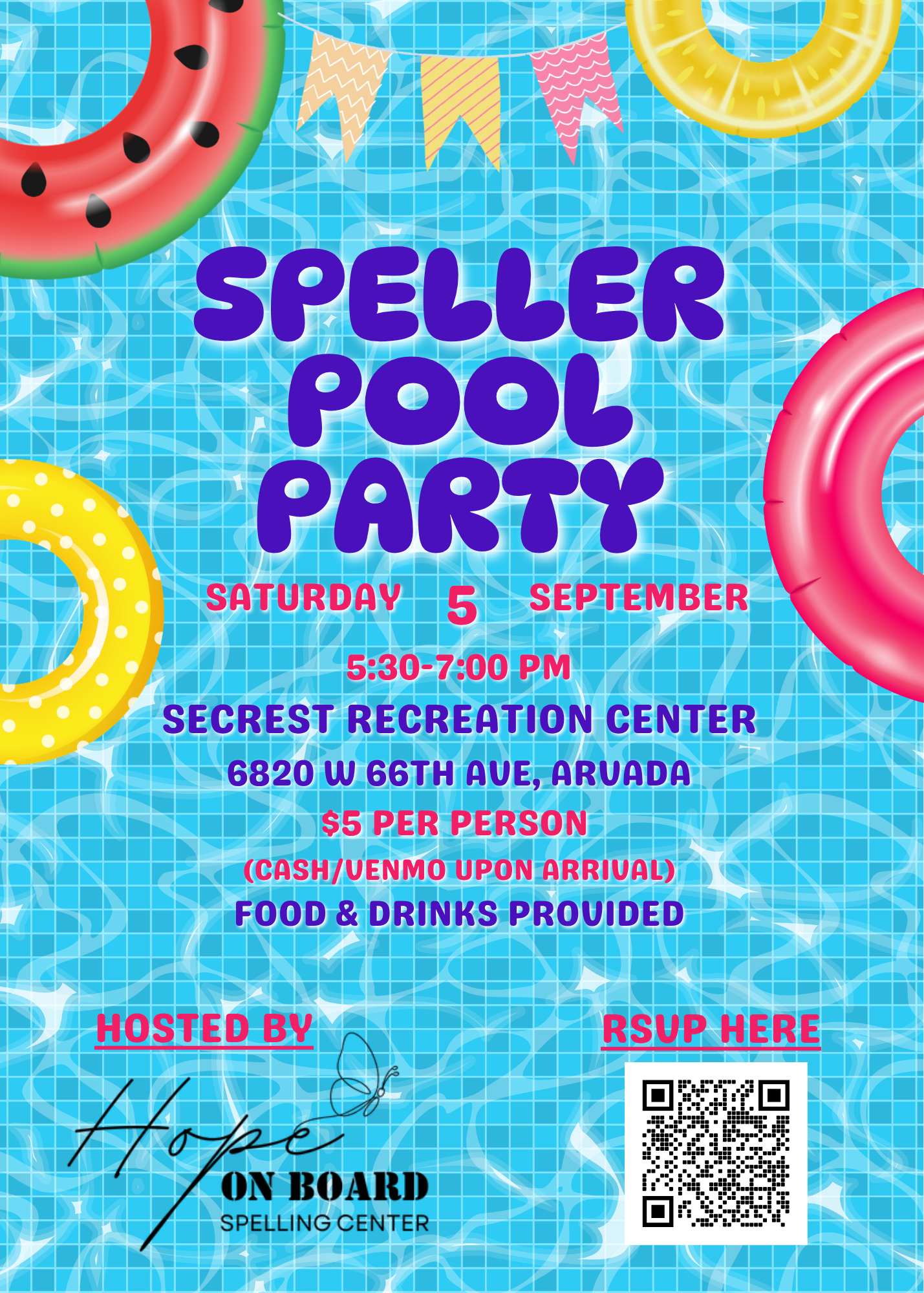
Next Community Event:
Meet Nicole at Hope on Board
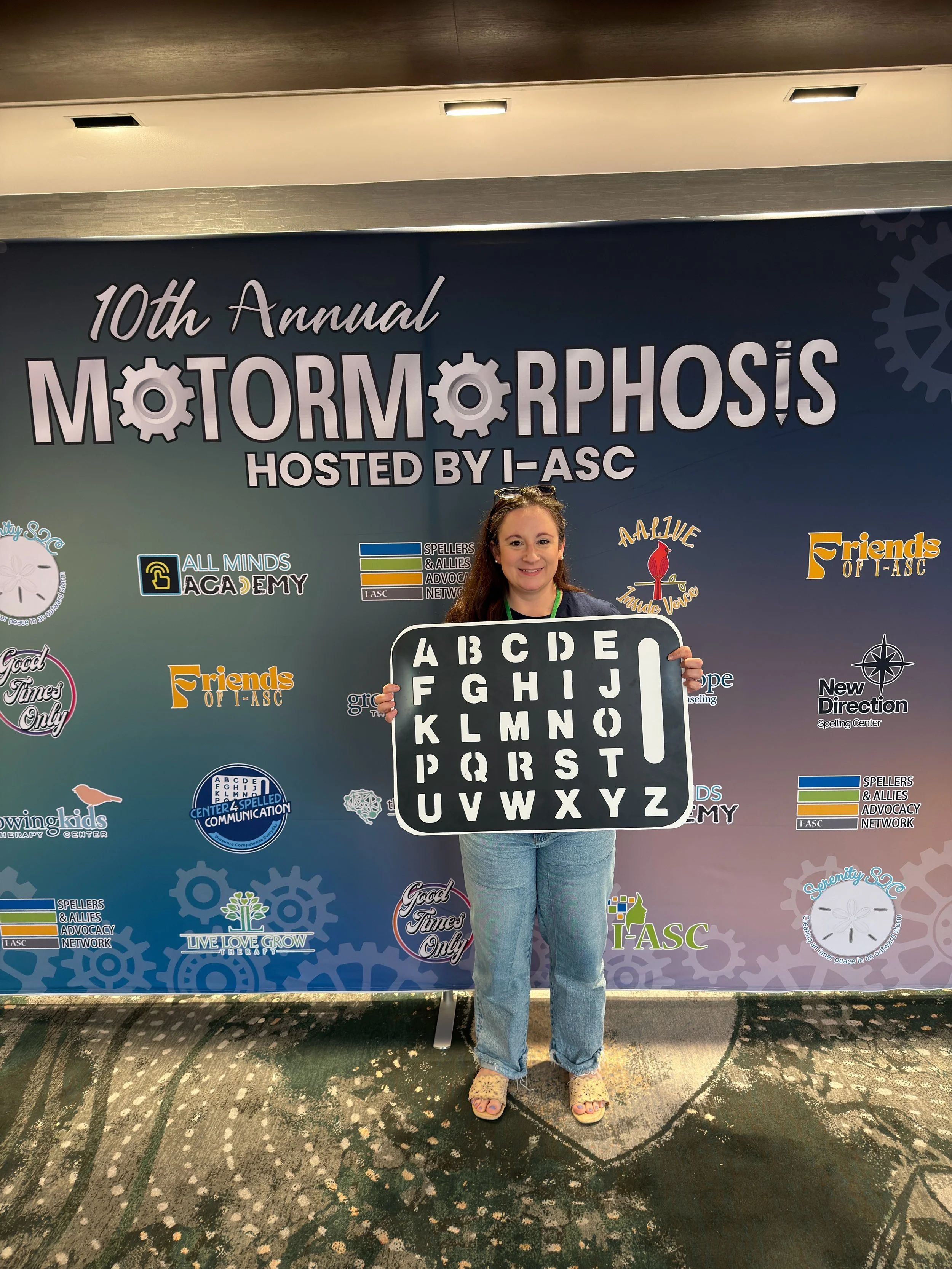
I am a Certified Spelling to Communicate™ Practitioner and a Professionally Certified Teacher in both English Language Arts and Special Education. In my tenure as a public school teacher, I taught secondary grades (7th-12th grades). I also served on district leadership committees focused on Literacy, Reading Intervention, and Personalized Learning. I have taken my education background and applied it to my work as a Spelling to Communicate™ Practitioner. I provide each speller I work with an individualized path towards open communication, designed with differentiated, hands-on learning experiences and regulation strategies.
There are many ways for us to work together! I serve families:
Located in Colorado (In-person sessions can be done at Hope On Board Spelling Center, my home office in Arvada, or in-home upon request.)
Visiting the state (Inquire about Spelling Intensives with me!)
By virtual support (You do not need to be a Colorado resident if I am providing you virtual support.)
What is Spelling to Communicate™?
Spelling to Communicate™ (S2C) is a teaching modality focused on nonspeaking, minimally speaking, or unreliably speaking individuals with autism or other individuals with motor planning challenges. S2C starts with presuming competence or believing that all individuals have the ability to learn and communicate regardless of their perceived limitations. The program is designed to help support the underlying foundations that make it challenging for them to communicate effectively. Students participating in the program work to communicate using a letter board.
Individuals begin with a structured educational lesson to point to letters to respond to a question with a known answer. Eventually, they move to more semi-open questions, open ended responses, and finally to expressing thoughts and emotions. At the same time, the student moves from using large letters with a limited array to a smaller letter size with all 26 letters available as their skills progress. Once proficient in the skills listed, they are introduced to new skills, such as independent keyboarding.
While Spelling to Communicate is not currently a service covered by private insurance or Medicaid, there are other funding options that can be explored, such as possible county services and partial scholarships through I-ASC (International Association for Spelling as Communication) and the NAA (National Autism Association).
To learn more about partial scholarships, click here.
For questions about possible county services, please contact us here.
Services
-
Before starting with a new speller, I meet virtually with parents and/or caregivers. (The speller is welcome to attend, too!) In this meeting, I provide an overview of Spelling to Communicate (e.g., reasoning behind taking a motor-based approach to communication, how the methodology works towards fluent communication, how practitioners presume competence, what progress looks like, and more), prepare families for the first session, and allow ample time for questions and discussion.
-
Through engaging, age appropriate lessons, I work to motor coach the speller’s eyes, arm, hand, and fingers to purposefully poke letters on a letterboard to spell out answers. I also work with spellers to determine regulation strategies tailored to their specific needs so that stamina for spelling may increase over time. Activities related to the lesson are modeled for the speller and their families and practiced so that purposeful motor abilities can increase both on and off the letterboard. Parent coaching is also done at times to assess how progress is going outside of sessions. To round out sessions, I discuss home practice plans for the week and follow up with a session note so that families have their plan for the week in writing, along with any resources that may aid this practice.
-
A 30-minute session is ideal for younger spellers (ages 4-10) or spellers who would like to build their regulation up to a longer session. The structure and content of a 60-minute session is adhered to, but adapted appropriately, for a 30-minute session.
-
Group sessions are a GREAT way for your speller to interact with other local spellers & practitioners while also practicing skills on the letter boards. Group sessions are organized by spellers’ ages (e.g., 5-8, 10-13, teens, and adults). Spellers at all stages of their Spelling to Communicate journeys are welcome!
-
Intensives are a great fit for families visiting Colorado! Multiple sessions are scheduled over a short period of time (3-5 days), where spellers have the opportunity to build momentum, strengthen motor planning, and increase confidence in their ability to express their thoughts. Parent coaching is also incorporated so that parents leave empowered with the knowledge, confidence, and practical tools needed to continue fostering communication beyond the intensive.
-
Through collaboration with an Occupational Therapist, I work to help those with apraxia/dyspraxia demonstrate their knowledge of age appropriate curriculum and content. Tutoring sessions may be scheduled for 30-minutes or 60-minutes.